
- Daily Life In Palestine At The Time Of Christ – Henri Daniel-Rops

I’m not sure where I got this book, but I’m always interested in books about life in Bible times, so after sitting on my shelf for years, I finally freed it from collecting dust and gave it a read. It is a long, detailed, well-written book about Jewish life in the time of Jesus. I really enjoyed it, although it took time and discipline to get through because of its length. There are probably better, more accessible books out there on this particular subject, but this was a book I already had in my library, and all in all, it was a worthwhile read.
“He was a Jew, a plain Jew, a Jew like you, a Jew among you…’ All this is the undeniable fact, a fact that too many Christians have for too long a time tended to forget, but one which the most recent historical and exegetical work continually makes more and more evident. ‘Jesus Christ, whom the Christians worship as God but [whom they hold to be] also truly man’, was a Jew, a Palestinian Jew of the time of Augustus and Herod: He was not only a Jew by his origins, the manner of His everyday life and His habit of mind, but His spiritual message had its deep roots in the Jewish soil of Israel.”
2. Where The Light Fell – Philip Yancey

When I chose to listen to this audiobook I was familiar with Philip Yancey, but hadn’t read any of his other books. That didn’t matter, as I became thoroughly engrossed in his autobiography and it was probably one of the top books I read this year. Born and raised in the Bible Belt of the southern United States, Yancey’s story touches on themes of religious nominalism, racial prejudice, family tensions, and most of all, the grace of God in all of it.
“In the churches of my youth, we sang about God’s grace, and yet I seldom felt it. I saw God as a stern taskmaster, eager to condemn and punish. I have come to know instead a God of love and beauty who longs for our wholeness. I assumed that surrender to God would involve a kind of shrinking—avoiding temptation, grimly focusing on the “spiritual” things while I prepared for the afterlife. On the contrary, God’s good world presented itself as a gift to enjoy with grace-healed eyes.”
3. Everything Sad Is Untrue – Daniel Nayeri

Probably not a book for everyone, but I loved it. The plot is minimal and meanders through stories of Persian folklore and immigrant life in the United States, telling the true story of how the author’s mother fled Iran after becoming a Christian and ended up in Oklahoma. But it is much more than that and touches on themes of refugees, immigrants, the power of story, and of telling the truth.
“Can God create a mountain so big that He himself couldn’t lift it? It’s trying to put God in a corner, because if He can or if He can’t, He’s not all-powerful. But the question is silly, because it assumes God is as stupid as we are. If you’re as big as God, there’s no such thing as “lifting.” It’s all just floating in a million universes you made. If you made an object of some insane, unusual size, then it’d still be a thing. And God is as big as everything at once. And as small. Physical stuff is too simple. The better question is, Can God create a law so big that He himself has to obey it? Is there an idea so big that God doesn’t remember anything before it? That answer is love. Love is the object of unusual size.”
4. Good and Angry – David Powlison
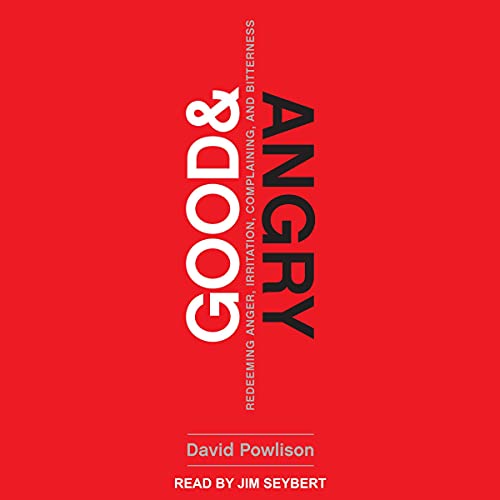
We all deal with anger. What we sometimes miss is that anger can come from a good place – wanting to right wrongs. But more often it comes from a selfish place – wanting things our way. Wisdom is knowing the difference and knowing how to respond to the anger we feel. Powlison ably dissects this topic and offers lots of practical advice to better deal with anger.
“There’s something high and mighty about anger, when distilled to its basic elements. Anger goes wrong when you get godlike. Your desires become divine law. Poke your way into every example of bad anger, and you’ll find god-playing.”
5. You Are Not Your Own – Alan Noble
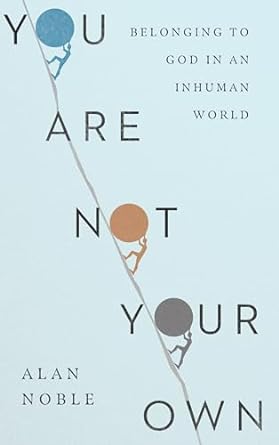
Using Lord’s Day One of the Heidelberg Catechism, Noble counters the modern assumption that “you are your own, and you belong to yourself.” He shows how such thinking becomes a heavy burden to bear, and how the truth that we belong to Someone else is freeing, and that it is freeing because that Someone is a good, loving, and powerful God.
“Everyone is on their own private journey of self-discovery and self-expression, so that at times, modern life feels like billions of people in the same room shouting their own name so that everyone else knows they exist and who they are—which is a fairly accurate description of social media.”
6. Get Real – John S. Leonard
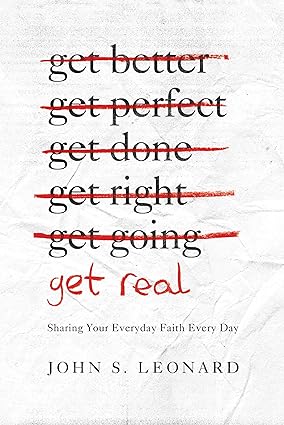
If evangelism scares you, this will be a good book to read. It won’t make sharing your faith automatically easy, but it will help you to evangelize in a more “real”, and less awkward, way. Traditional evangelism encourages you to memorize a gospel formula and then share said formula with anyone you know - a co-worker, a stranger on the bus. Leonard shows where traditional evangelism can go wrong and offers a different approach. Lots of helpful, and perhaps counter-intuitive, advice that comes from the author’s personal experience. I did find that he overstated his case at times, and I also had lots of questions about how to apply what he said for a Mexican context. But I highly recommend the book.
“The gospel begins with the person you’re speaking to. We must listen more than we speak so that we might fully understand the person God has brought into our lives. As they speak about the immediate problems they’re facing or questions they have, we should be listening and praying, asking the Lord to help us gather together everything we have heard, read, or understand from the Scriptures in order to respond to their problems or questions. Our entire response should be based on the information that we have heard from the people we’re listening to. In the West, we put far too much emphasis on the power of speaking, while overlooking the power of listening.”
7. El Chapo – Noah Hurowitz
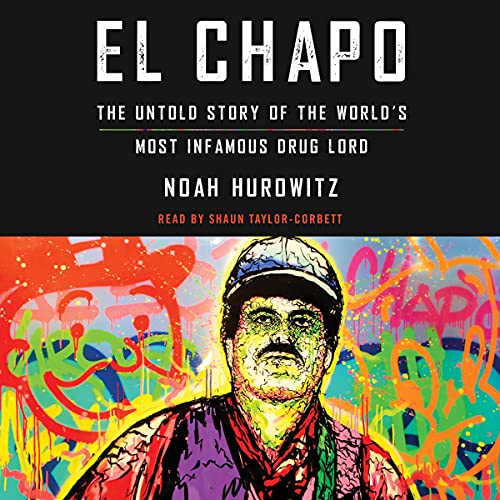
Living in Mexico, this book was of particular interest. One frequently hears about the drug cartels and their influence of Mexican politics and life. El Chapo, as he is known, is the most famous, and perhaps the most violent, of the Mexican drug-lords and his story explains a lot about the drug trade and why cartels continue to have such power in Mexico. The author’s view on the drug trade/war, and specifically America’s involvement, come through, but the reader can make his own judgements. Definitely left me praying, “Lord have mercy.”
“The best way of understanding the drug trade is this: it is a capitalist enterprise in Mexico, and as such it has always had a corrupt and fuzzy relationship with the state — and has always been subject to the coercive demands and fickle priorities of U.S. foreign policy. Prohibition increases the risks, frequency of violence, and the profit margins, but does not inherently separate the drug trade from the state.”
8. Church History In Plain Language – Bruce L. Shelley
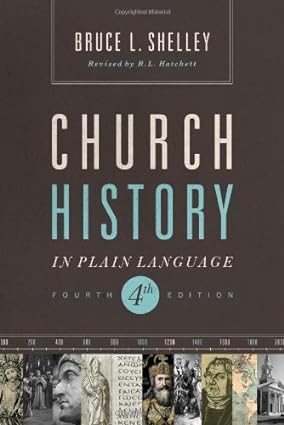
I’d say this book lived up to its title. It tells the story of the church in plain language. Church history can become very complicated to tell because it is almost impossible to keep straight all the dates, names, events and terminology. The author did a good job of keeping things simple and touching on the major events and persons, which does means a lot is skipped over. But if you are looking for a good review of church history, I’d recommend this book.
“Christianity is the only major religion to have as its central event the humiliation of its God.”
9. Sí, Señor – Fermin IV

Sorry if you don’t read Spanish. I actually found it refreshing to read a Spanish book that wasn’t translated from English and also written by a Mexican. The author, Fermin IV, was a famous rapper who came to faith in Christ and eventually became a pastor of a church in Mexico City. He tells his story of how he came to love the art of rap; how his rap group became internationally famous with lyrics about drugs and revenge; and then how everything changed when he heard the gospel.
“When I came with a solo album to the same radio station that had received Control Machete five years before, they were surprised, but even more when they realized that I was talking about Christ. Songs like ‘Una nueva vida’, ‘Abba Padre’ y ‘Bendiciones’ stood out on the back cover and, without further ado, the radio announcer started to question me.
‘What happened to you Fermin? What is this that now you are a Christian?’ he asked me, ignoring the album that he had in his hand and fixing his gaze on me.
‘Well yes, I received Christ two years ago…’
He interrupted me: ‘Bro, Jesus is a fairy tale, the Bible is manipulated by men, you seriously believe it is the Word of God?”
10. All The Light We Cannot See – Anthony Doerr

This book tells the story of two youth during the time of WW2. Marie-Laure lives in Paris, is blind, and escapes from the Germans with her father to her uncles home in another town, carrying with her a priceless secret. Werner is German, an orphan, and a genius when it comes to radios. He ends up being recruited into the army and uses his special skills to fight the resistance. From the start of the story you know the two main characters are going to meet, but nevertheless, it is a captivating story. I did find the eventually meeting of Marie-Laure and Werner to be lacking something, and the hope which the author holds out at the end is a bit hollow (i.e. lacking the gospel), but still a really enjoyable book.
“The brain is locked in total darkness, of course, children, says the voice. It floats in a clear liquid inside the skull, never in the light. And yet the world it constructs in the mind is full of light. It brims with color and movement. So how, children, does the brain, which lives without a spark of light, build for us a world full of light?”
 The Rabbi's Burrito
Leave a comment